How Do Large Uterine Fibroids Impact IVF Success Rates?
Wiki Article
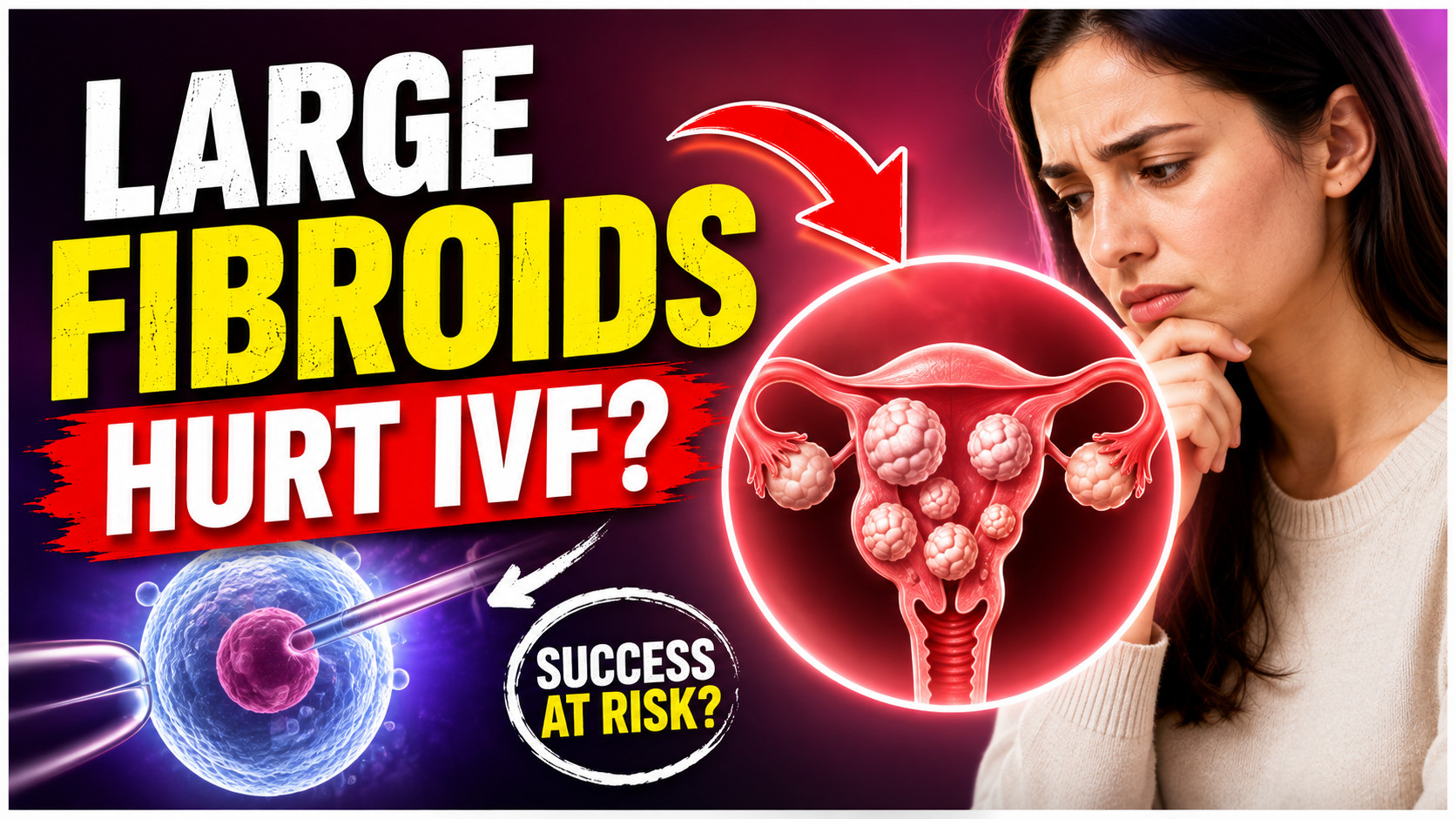
Large uterine fibroids can affect IVF outcomes, but size alone does not determine whether IVF will succeed. The location of the fibroid is often more important, particularly when it distorts the uterine cavity. Fibroids that interfere with implantation may reduce the likelihood of pregnancy, while some large fibroids outside the uterine cavity may have less impact on fertility.
Women undergoing IVF who also have uterine fibroid symptoms should therefore have the fibroids properly mapped before deciding whether treatment is necessary.
Can Large Fibroids Reduce IVF Success?
They can, particularly when they affect the uterine cavity.
Large fibroids may potentially:
Distort the uterine cavity
Interfere with embryo implantation
Affect the normal shape of the uterus
Alter the local uterine environment
Increase pregnancy-related complications in some women
However, not every large fibroid has the same effect. A large subserosal fibroid growing outward from the uterus may have less direct impact on implantation than a smaller fibroid that protrudes into the uterine cavity.
Why Does Fibroid Location Matter for IVF?
Fibroids are generally classified according to where they develop.
Submucosal Fibroids
These grow into the uterine cavity and are the most concerning type for implantation.
They can:
Distort the cavity
Interfere with embryo implantation
Affect the endometrial environment
Evidence from the American Society for Reproductive Medicine supports the importance of cavity-distorting fibroids when considering fertility treatment.
Intramural Fibroids
These develop within the muscular wall of the uterus.
Their effect on IVF is more complicated.
Some intramural fibroids may affect fertility when they are large or distort the uterine cavity, while others may have a smaller effect.
Subserosal Fibroids
These grow toward the outside of the uterus.
Because they generally do not distort the uterine cavity, they may have less direct effect on embryo implantation.
This is why simply asking whether a fibroid is "large" is not enough to predict IVF outcomes.
Does Fibroid Size Affect IVF Success?
Size can matter, but it should not be considered in isolation.
Doctors may assess:
Fibroid diameter
Number of fibroids
Location
Whether the uterine cavity is distorted
Thickness and condition of the endometrium
Previous IVF outcomes
Age and ovarian reserve
Other fertility factors
A large fibroid that does not affect the uterine cavity may be managed differently from a smaller fibroid that significantly changes the cavity.
Can Fibroids Affect Embryo Implantation?
Yes, particularly when they distort the uterine cavity.
Successful implantation requires the embryo to attach to a suitable area of the uterine lining. A cavity-distorting fibroid can change the anatomy of this environment.
ASRM states that there is fair evidence that removing cavity-distorting fibroids can improve pregnancy rates in appropriately selected women.
Can Large Fibroids Increase Miscarriage Risk?
Some studies have associated fibroids with an increased risk of pregnancy complications, including miscarriage, but the relationship varies according to fibroid characteristics.
The strongest concern is generally with fibroids that significantly alter the uterine cavity.
Doctors therefore consider the complete clinical picture rather than using fibroid size alone to predict pregnancy outcomes.
Should Large Fibroids Be Treated Before IVF?
Not automatically.
Treatment before IVF may be considered when a fibroid:
Distorts the uterine cavity
Is associated with repeated implantation failure
Causes significant symptoms
Interferes with the uterus in a way that may affect pregnancy
Is considered clinically significant by the fertility team
ASRM does not recommend routine removal of all non-cavity-distorting fibroids solely to improve fertility.
Can Myomectomy Improve IVF Outcomes?
For selected women, removing a cavity-distorting fibroid through myomectomy may improve the chances of pregnancy.
Myomectomy preserves the uterus while removing the fibroid.
However, surgery itself can require recovery time and may create scar tissue or other considerations that need to be discussed before IVF.
The decision should therefore involve both the gynecologist and fertility specialist.
Can Uterine Artery Embolization Be Used Before IVF?
Uterine Artery Embolization (UAE) is a minimally invasive treatment that reduces blood flow to fibroids, causing them to shrink.
However, UAE requires careful consideration in women actively planning pregnancy.
ACOG notes that the effect of UAE on future pregnancy is not clear.
Therefore, women considering IVF should discuss fertility plans with both their reproductive specialist and interventional radiologist before choosing UAE.
How Are Fibroids Evaluated Before IVF?
Doctors may use:
Transvaginal ultrasound
Pelvic ultrasound
Saline infusion sonography
Hysteroscopy
MRI when detailed fibroid mapping is needed
The purpose is to determine:
Number of fibroids
Exact location
Size
Relationship to the uterine cavity
Whether the cavity is distorted
This information helps the fertility team decide whether treatment should occur before embryo transfer.
What Happens If a Large Fibroid Is Left Untreated Before IVF?
The answer depends on the fibroid.
Some women with large fibroids proceed with IVF without treatment and achieve pregnancy successfully. In other cases, particularly when the fibroid distorts the cavity, treatment may be recommended before embryo transfer.
There is no universal rule that every large fibroid must be removed before IVF.
Conclusion
Large uterine fibroids can affect IVF outcomes, but fibroid location and whether the uterine cavity is distorted are often more important than size alone. Submucosal and cavity-distorting fibroids are the most concerning because they can interfere with embryo implantation. Large fibroids that grow toward the outside of the uterus may have less direct impact on implantation.
Women preparing for IVF should therefore undergo detailed imaging and discuss the findings with their fertility specialist before deciding on treatment. Myomectomy may be appropriate for selected cavity-distorting fibroids, while Uterine Artery Embolization is another minimally invasive treatment option but requires careful fertility counselling because its effect on future pregnancy remains uncertain. Women exploring fibroid treatment can consult an interventional radiologist Jaipur alongside their fertility specialist to determine the most appropriate approach.
Frequently Asked Questions
Can large uterine fibroids reduce IVF success?
Yes, particularly when they distort the uterine cavity. However, the effect depends on fibroid location, size, number, and other fertility factors.
Are all large fibroids a problem for IVF?
No. A large fibroid that does not distort the uterine cavity may have less impact on implantation than a smaller cavity-distorting fibroid.
Should fibroids be removed before IVF?
Not always. Treatment may be considered when fibroids distort the uterine cavity, cause significant symptoms, or are suspected of affecting fertility.
Can myomectomy improve IVF chances?
For appropriately selected women with cavity-distorting fibroids, removing the fibroid may improve pregnancy outcomes. The decision should be made with the fertility team.
Is Uterine Artery Embolization suitable before IVF?
UAE can shrink fibroids while preserving the uterus, but its effect on future pregnancy remains uncertain. Women planning IVF should discuss this carefully with their fertility specialist before choosing UAE.
Report this wiki page